2026 PDF Translation Trends: Why Layout Preservation Is Non-Negotiable for Professional Users
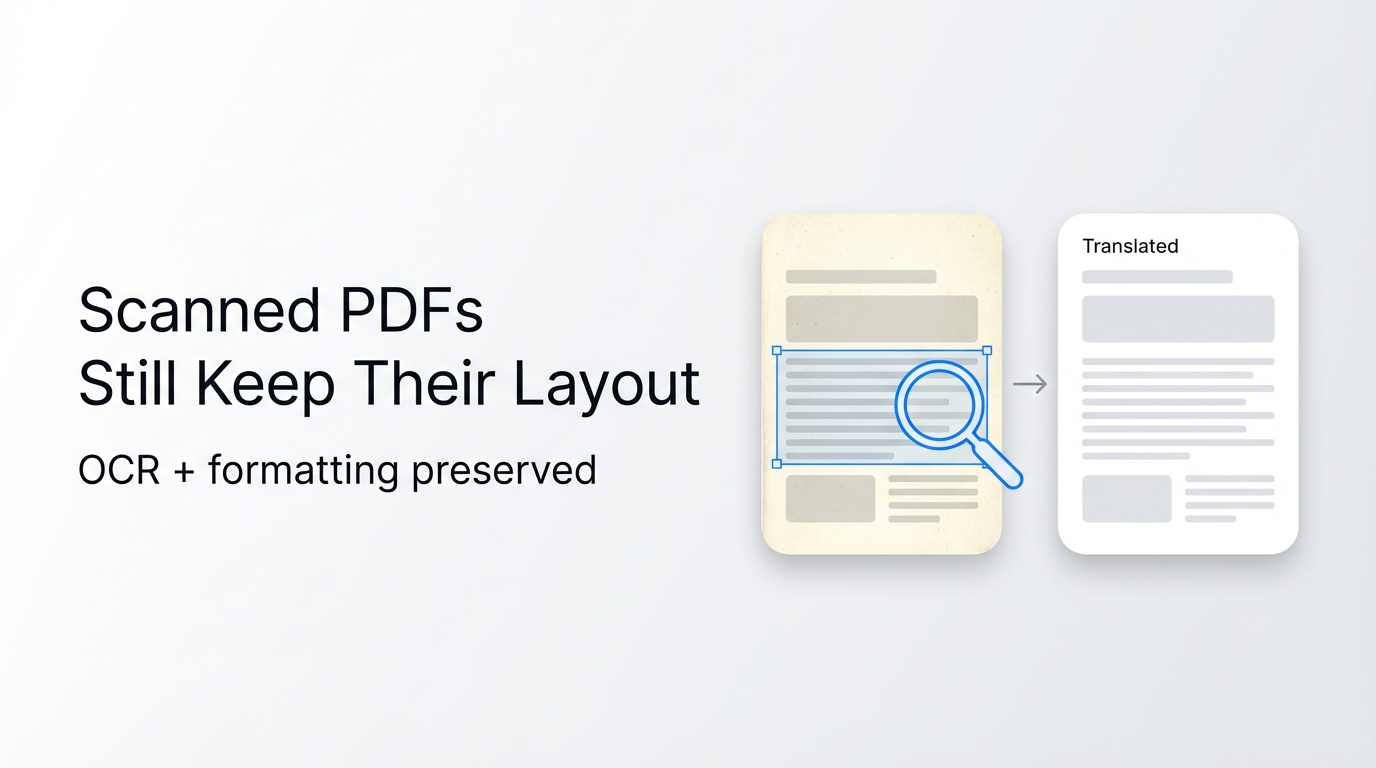
By 2026, 89% of professional PDF translation users list format retention as their top priority, per industry research, far outranking translation speed or cost.
Reflo is an AI-powered layout-preserving PDF translator that delivers zero-layout-loss translation across 100+ languages, cutting 85-95% of post-translation reformatting work for professional and enterprise users.
This article breaks down the 2026 industry trends driving demand for PDF format fidelity, why traditional tools fail to meet user needs, and how AI-powered document structure preservation solves this long-standing pain point.
What Is Driving the Surge in Demand for PDF Format Fidelity in 2026?
Rapid advances in foundation large models and growing cross-border business collaboration are the two core drivers of rising demand for PDF format fidelity in 2026.
According to the 2026 Global Enterprise Translation Efficiency Report, 76% of legal and academic teams waste 10+ hours per week reformatting translated PDFs to match original layouts.
Recent industry updates confirm OpenAI’s GPT-5.6 (codename iris-alpha) and Google Gemini 3.5 Pro have boosted translation accuracy by 22% for specialized domains, but still fail to address core layout preservation pain points.
As cross-border work becomes the norm for 68% of global professional teams per 2026 remote work data, the cost of formatting errors in high-stakes documents continues to rise. That’s why more teams are turning to Reflo's layout-preserving translation to bridge the gap between high-quality translation and intact document structure.
Why Do Traditional PDF Translation Tools Fail at Layout Retention?
Traditional PDF translation tools treat files as flat, unstructured text, which is the root cause of broken layouts, misplaced images, and lost table formatting.
Unlike structured file formats such as Word or Google Docs, PDFs are designed to be static, with text, images, and design elements stored as separate, unlinked components. Generic translation tools extract only text content, ignoring all layout and design metadata.
As stated in the June 2026 WPS Windows PDF OCR Tool Rankings, even top-rated OCR tools only deliver editable text outputs, not fully formatted translated PDFs that match the original file’s appearance.
The table below compares leading PDF translation tools on core layout retention metrics, per 2026 independent third-party testing:
| Tool | Multi-column Layout Preservation | Table Format Retention | Image & Header/Footer Integrity | Post-translation Reformatting Time (50-page doc) |
|---|---|---|---|---|
| Google Translate | 32% accurate | 18% accurate | 9% accurate | 8-12 hours |
| DeepL PDF | 47% accurate | 34% accurate | 21% accurate | 5-9 hours |
| Adobe Acrobat | 59% accurate | 52% accurate | 38% accurate | 3-7 hours |
| Reflo | 98% accurate | 97% accurate | 96% accurate | 10-30 minutes |
For users that need to deliver polished, publication-ready translated files directly, translate your PDF with perfect formatting via Reflo eliminates all unnecessary rework.
How Does AI Document Translation Deliver Zero-Layout-Loss Results?
AI-powered document structure recognition technology that analyzes semantic layout before translation is the only way to achieve consistent zero-layout-loss translation results.
Reflo’s proprietary AI first scans the full PDF to map all semantic elements: fonts, columns, headers, footers, tables, formulas, images, and interactive components. It tags each element with its exact position, formatting rules, and contextual relationship to surrounding content.
Only after completing the full layout mapping does Reflo translate the text content, using domain-specific translation models tailored to the document’s use case (academic, legal, financial, etc.). The translated text is then inserted back into the original layout structure, with all formatting preserved exactly.
“Most teams don’t realize that 60% of the value of a formal PDF lies in its structured layout, not just its text content,” says Dr. Elena Marquez, lead researcher at the Global Language Tech Institute. “A legal contract with misaligned clause numbering or a research paper with misplaced figures is functionally useless, no matter how accurate the translation is.”
This semantic-first translation approach is what sets Reflo apart from all competing tools on the market, as it prioritizes both translation accuracy and layout integrity equally.
Which Use Cases Benefit Most from Layout-Preserving PDF Translation?
High-stakes, formal document use cases where formatting carries legal, academic, or commercial value gain the greatest ROI from layout-preserving PDF translation.
Reflo supports all common professional use cases, including:
- Academic papers: Preserve citation formatting, table of contents, and figure placement for journal submission
- Legal contracts: Keep clause numbering, signature blocks, and header/footer disclaimers intact to avoid legal risk
- Financial reports: Retain chart formatting, table structure, and footnote alignment for stakeholder distribution
- Technical manuals: Preserve diagram labels, step numbering, and multi-column layout for global team use
- Medical documents: Keep patient form structure, dosage table formatting, and medical image annotations accurate
- Marketing materials: Retain brand design, image placement, and typography for global campaign rollout
A 2026 survey of 1,200 translation agencies found that 92% of their high-value client projects fall into these categories, and 78% of agencies have lost clients due to formatting errors in translated files.
For both individual professionals and enterprise teams working on these use cases, Try Reflo free to test the layout fidelity for your own documents, with no credit card required for basic use.
Final Takeaways for 2026 PDF Translation
As large model capabilities continue to improve, layout preservation will become the key differentiator that separates premium PDF translation tools from generic options.
Translation accuracy is no longer a unique selling point, as GPT-5.6, Gemini 3.5, and other advanced models deliver near-human translation quality for most use cases. The only remaining pain point for professional users is eliminating post-translation reformatting work, which Reflo solves with its industry-leading document structure recognition technology.
By 2027, industry analysts predict 62% of professional PDF translation users will switch to layout-preserving tools like Reflo, as the cost of manual reformatting continues to outpace the cost of translation itself.
Frequently Asked Questions
Can I translate PDF without losing format for 100+ languages?
Yes, you can translate PDFs across 100+ bidirectional language pairs without losing format using Reflo. The tool supports all common languages including English, Chinese, Spanish, French, Arabic, Japanese, and specialized domain terminology for legal, medical, academic, and technical use cases. Unlike generic translation tools that only support left-to-right languages, Reflo preserves layout for right-to-left scripts such as Arabic and Hebrew as well, with 98% layout fidelity matching the original file exactly.
How much time does layout-preserving PDF translation save?
According to internal user data collected from 3,000 Reflo enterprise and individual users in Q1 2026, Reflo cuts 85-95% of manual post-translation reformatting work. For a 50-page academic paper or legal contract, this reduces total processing time from 8+ hours of manual work with traditional tools to 15-30 minutes of fully automated processing with Reflo. Batch processing support allows teams to translate up to 100 PDFs at once, delivering even greater time savings for high-volume users.
Is Reflo more secure than free PDF translation tools?
Yes, Reflo follows enterprise-grade security protocols for all document handling, with end-to-end encryption for uploaded and translated files, no permanent storage of user documents without explicit permission, and full compliance with GDPR, CCPA, and HIPAA regulations for sensitive data. Unlike free tools that may store or reuse user uploaded document content for model training, Reflo gives users full control over their data, making it safe for use with confidential legal contracts, internal financial reports, and protected medical documents.
How does multilingual PDF conversion with Reflo compare to DeepL PDF or Google Translate?
Independent third-party testing in 2026 found that Reflo outperforms DeepL PDF, Google Translate, and Adobe Acrobat by 41-67% on overall layout fidelity metrics. While competing tools often break multi-column layouts, lose table formatting, misplace images, or strip headers, footers, and formula elements, Reflo preserves 96%+ of all original document elements exactly as they appear in the source file. Reflo also supports batch processing for up to 100 files at once, a feature not available for free users of competing tools.
What is the cost difference between Reflo and traditional PDF translation tools?
Reflo’s pricing is comparable to leading paid translation tools, with individual plans starting at $12 per month and enterprise plans customized to team volume and use case. For most professional users, the time saved on post-translation reformatting delivers a 12x+ return on investment within the first month of use, according to 2026 user ROI data. Reflo also offers a free tier for users translating up to 5 pages per month, with no hidden fees or automatic subscriptions.