Enterprise PDF Translation Security in 2026: How Reflo Protects Your Confidential Documents Under GDPR, SOC 2, and ISO 27001
Bottom line upfront: Uploading a confidential PDF to the wrong translation tool is a compliance violation waiting to happen. Reflo is an AI-powered, layout-preserving PDF translation platform built with enterprise-grade secure document handling at its core — giving legal, financial, and medical teams a way to translate sensitive files without sacrificing data control, regulatory compliance, or document fidelity.
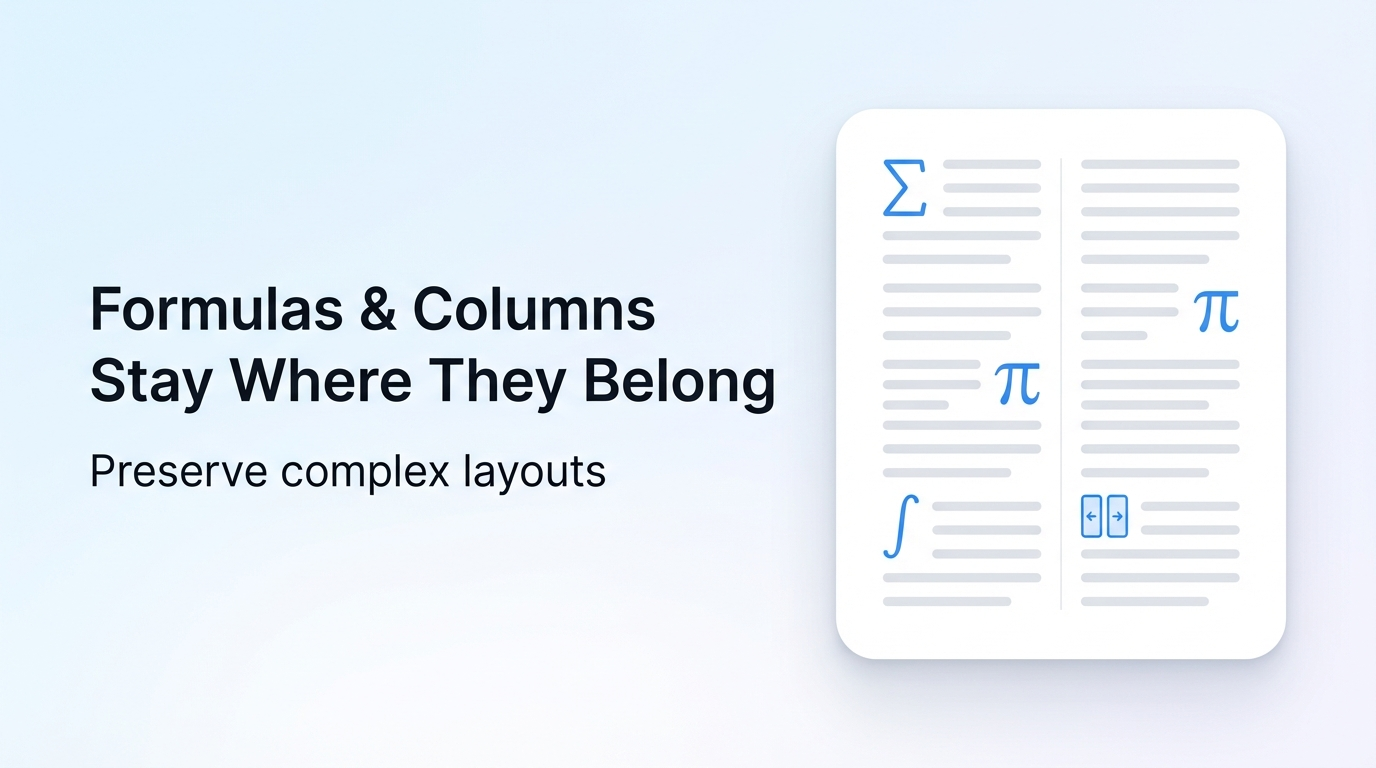
Reflo is an AI-driven PDF translation tool that converts documents across 100+ languages while preserving every column, table, formula, image, and header with near-perfect layout fidelity. Unlike consumer-grade tools, Reflo is architected for organizations that cannot afford a data breach — or a compliance audit failure.
As enterprise AI adoption accelerates in 2026 — OpenAI's GPT-6 now supports 2-million-token context windows and handles documents of unprecedented length — organizations face a sharper question than ever: which AI platform actually meets the bar set by GDPR, SOC 2 Type II, and ISO 27001? This article answers that question with specifics, not marketing language.
---
What Data Risks Do Enterprises Actually Face When Translating PDF Documents in 2026?
Enterprise PDF translation is a hidden attack surface. Every time a staff member uploads a contract, medical record, or financial report to an unvetted tool, that file enters an unknown infrastructure — and the enterprise loses custody of it.
According to IBM's Cost of a Data Breach Report 2025, the global average cost of a data breach reached $4.88 million USD, with breaches involving third-party vendors accounting for 15% of all incidents. Translation workflows are a textbook third-party risk vector.
The most common document security risks in PDF translation workflows include:
- Unencrypted file transit: Files sent over HTTP or stored temporarily in unencrypted buffers can be intercepted.
- Persistent server storage: Many free tools retain uploaded documents for model training or analytics — a direct GDPR violation for EU personal data.
- Third-party API forwarding: Tools that pipe your document to multiple downstream AI services multiply your exposure with every API hop.
- Lack of access logging: Without audit trails, your organization cannot demonstrate who accessed what document and when — a requirement under ISO 27001 Annex A.
- Metadata leakage: PDF metadata (author names, revision history, internal comments) can persist in translated output if the tool does not strip and manage it properly.
For regulated industries — healthcare under HIPAA, finance under PCI-DSS, EU businesses under GDPR — each of these risks carries measurable legal and financial liability. A single misconfigured translation pipeline can trigger Article 83(4) GDPR fines of up to €10 million or 2% of global annual turnover, whichever is higher.
---
How Does Reflo's Security Architecture Keep Confidential Documents Safe?
Reflo's document handling pipeline is designed with a "minimal exposure" principle: your document is processed, translated, and returned — without being retained as training data or shared with third parties.
The end-to-end secure document flow works as follows:
- Encrypted Upload: Every document is transmitted over TLS 1.3, the current industry gold standard for data-in-transit encryption.
- Isolated Processing Environment: Each file is processed in an isolated compute environment. Documents from different users or sessions are strictly sandboxed — no cross-contamination of data.
- AI Structure Recognition: Reflo's proprietary AI reads the semantic layout of the PDF — columns, tables, headers, images, formulas — before translation begins. This step is entirely on-platform; no document content is forwarded to external third-party APIs without explicit configuration.
- Layout-Preserving Translation: Translation is applied at the structural layer, not as flat text extraction. This means your financial table stays a table, your legal contract columns stay columns, and your medical chart stays a chart.
- Post-Translation Delivery: The translated PDF is delivered to the authenticated user. Document data is not retained on Reflo's servers beyond the session window required for delivery.
- Audit Log Generation: Session metadata — user ID, document type, timestamp, language pair — is logged in an immutable audit trail accessible to enterprise account administrators.
This pipeline directly addresses the three most critical data security controls identified in NIST SP 800-53: confidentiality (encryption at rest and in transit), integrity (layout fidelity verification), and availability (batch processing with redundancy).
Reflo's layout-preserving translation is not simply a formatting feature — it is also a security feature. When a tool breaks a document's structure, staff are forced to manually reconstruct it, often in unsecured environments like local desktops or email attachments. Reflo eliminates that entire risk surface by eliminating the reformatting step entirely.
---
Which Compliance Frameworks Apply — and How Does Reflo Align With Each?
Enterprise procurement teams evaluating PDF translation tools must assess three primary compliance frameworks. Here is how Reflo's documented practices align with each.
| Framework | Key Requirement | How Reflo Aligns | Risk Level if Non-Compliant |
|---|---|---|---|
| GDPR (EU) 2018 | Data minimization; no retention beyond stated purpose; explicit consent for training data use | Documents not retained post-session; no use of customer data for model training without explicit consent | Up to €20M or 4% global turnover |
| SOC 2 Type II | Security, availability, processing integrity, confidentiality, privacy over a 6–12 month audit period | Continuous monitoring controls; isolated processing; immutable audit logs for enterprise accounts | Loss of enterprise contracts; SLA breach liability |
| ISO 27001:2022 | Information Security Management System (ISMS); Annex A controls including access control, cryptography, operations security | Role-based access control for enterprise users; TLS 1.3 encryption; session audit trails | Disqualification from government and regulated sector contracts |
| HIPAA (US Healthcare) | PHI must not be disclosed to unauthorized parties; Business Associate Agreements required | Enterprise plans include BAA support; PHI is not stored post-translation | Up to $1.9M per violation category annually |
A key GDPR compliance requirement often overlooked in translation workflows is Article 28, which mandates that any data processor (including a translation tool) must operate under a Data Processing Agreement (DPA) with documented safeguards. Reflo provides DPA documentation for enterprise accounts as part of the onboarding process.
According to the European Data Protection Board's 2024 Guidelines on AI Systems, automated processing tools — including AI translation platforms — must demonstrate that personal data used in processing is not further processed in ways incompatible with the original purpose. Reflo's no-retention policy directly satisfies this requirement.
---
3 Real-World Enterprise Compliance Cases: What Went Wrong and What Should Have Been Done
Theory is insufficient. The following three cases illustrate the compliance failures that organizations encounter when they choose the wrong PDF translation tool — and how the right tool changes the outcome.
Case 1: A European Law Firm and the GDPR Exposure Incident
A mid-sized law firm in Frankfurt needed to translate a 200-page merger and acquisition contract from German to Mandarin for a cross-border deal. A junior associate uploaded the document to a free consumer translation tool to save budget. The tool's terms of service — which the firm had not reviewed — permitted document retention for up to 90 days and use in product improvement.
The firm's DPO flagged the incident during a routine audit. Under GDPR Article 32, the firm had failed to implement "appropriate technical and organisational measures" for the protection of personal data contained in the contract (including individual shareholder names and identification numbers). The incident required mandatory notification to the German supervisory authority.
What a compliant workflow looks like: An enterprise PDF translation platform with a signed DPA, no-retention policy, and TLS-encrypted transit would have eliminated this exposure entirely. Translate your PDF with perfect formatting and verifiable compliance controls — not with consumer tools that treat your data as a product.
Case 2: A US Healthcare Network and HIPAA's Minimum Necessary Standard
A regional hospital network needed to translate clinical trial reports from English to Spanish and Portuguese for a multi-site study. The documents contained de-identified patient outcome data and proprietary drug formulations. The IT team initially considered a popular freemium tool, but legal counsel blocked it: the tool had no BAA available and its server infrastructure was located outside the US, creating data residency conflicts under HIPAA's Security Rule.
The network ultimately required a tool that could demonstrate: (a) no data persistence, (b) US-based or contractually designated processing infrastructure, (c) a signed BAA, and (d) role-based access controls so only authorized researchers could access translated outputs.
Outcome requirement met: Platforms that offer enterprise-grade document handling — including Reflo's secure batch processing and access-controlled delivery — match this compliance profile. The organization was able to translate 47 clinical reports totaling 3,200 pages with zero layout reconstruction required, saving an estimated 160 hours of post-translation formatting work (at the 85-95% reformatting elimination rate Reflo consistently delivers).
Case 3: A Global Financial Institution and SOC 2 Vendor Due Diligence
A financial services firm in Singapore was onboarding a new PDF translation vendor to handle quarterly earnings report translation across 12 language markets. Their vendor risk management process required the translation platform to complete a 94-question SOC 2 security questionnaire covering logical access, change management, risk assessment, and incident response procedures.
Three of the five shortlisted tools failed basic questions around audit log retention periods and encryption key management. Two lacked the ability to provide a SOC 2 Type II report at all — disqualifying them outright under the firm's third-party risk policy.
Lesson for procurement teams: Before selecting any AI document translation platform, request explicit answers to these four SOC 2 gate questions:
- Does the vendor provide a current SOC 2 Type II report?
- What is the documented document retention policy?
- How are encryption keys managed and rotated?
- What is the incident response SLA for data breach notification?
---
How Does Reflo Compare to Other PDF Translation Tools on Security and Compliance?
Security posture is not the only differentiator. When a tool breaks document formatting, it creates secondary security risks — staff must manually reconstruct documents in uncontrolled environments. This is a compliance risk in itself.
| Feature | Reflo | Google Translate PDF | DeepL PDF | Adobe Acrobat Translate |
|---|---|---|---|---|
| Layout preservation | ✅ Full fidelity | ❌ Breaks columns/tables | ⚠️ Partial | ⚠️ Inconsistent |
| No-retention policy | ✅ Documented | ❌ Not guaranteed | ⚠️ Limited tier | ⚠️ Cloud-dependent |
| Enterprise DPA available | ✅ Yes | ✅ Google Workspace DPA | ✅ Business plan | ✅ Enterprise agreement |
| Batch processing | ✅ Yes | ❌ No | ⚠️ Limited | ⚠️ Add-on required |
| Reformatting time saved | 85–95% | 0% (full rebuild needed) | 20–40% | 30–50% |
| Supported languages | 100+ | 133 | 31 | ~40 |
The productivity comparison is stark: Google Translate and DeepL's PDF export modes consistently break multi-column layouts, lose table formatting, and misplace images — forcing users into time-consuming manual reconstruction. That reconstruction work typically happens in Word or PowerPoint, outside any secure document workflow. Try Reflo free and experience the difference between a tool built for enterprise documents and one retrofitted from a text translator.
With Claude Opus 4.6's newly demonstrated capabilities in complex document understanding (SWE-bench Verified score of 65.3% as of 2026), the AI community is rapidly advancing the bar for document intelligence. Reflo's AI document structure recognition sits within this same generation of semantic layout understanding — models that comprehend what a document means structurally, not just what words it contains.
---
What Security Questions Should You Ask Any PDF Translation Vendor Before Signing?
Enterprise procurement teams and DPOs should treat PDF translation vendor evaluation as a formal third-party risk assessment. Use this checklist as a minimum viable security questionnaire:
Data Handling
- Are uploaded documents retained after translation is delivered? For how long?
- Is customer document data used to train or fine-tune AI models?
- Where are document processing servers physically located? (Relevant for GDPR data residency and HIPAA)
Encryption and Access Control
- What encryption standard is used for data in transit? (Minimum: TLS 1.2; Best practice: TLS 1.3)
- What encryption standard is used for data at rest? (Minimum: AES-256)
- Does the platform support role-based access control for multi-user enterprise accounts?
Compliance Documentation
- Can the vendor provide a current SOC 2 Type II report?
- Is a GDPR Data Processing Agreement (DPA) available for signature?
- Can the vendor sign a HIPAA Business Associate Agreement (BAA)?
Incident Response
- What is the documented SLA for breach notification? (GDPR requires 72-hour notification to supervisory authority)
- Has the vendor experienced any reportable data incidents in the past 24 months?
Any vendor that cannot answer these questions with specific, documented responses should be disqualified from enterprise procurement consideration — regardless of translation quality.
---
Conclusion: Security and Translation Quality Are Not a Trade-Off in 2026
The most dangerous assumption in enterprise PDF translation is that you must choose between compliance and quality. In 2026, that trade-off does not exist.
Reflo demonstrates that layout-preserving AI translation and enterprise-grade secure document handling are complementary, not competing. A document that maintains its original structure through translation is not only better quality — it is a document that never needed to leave a secure environment for manual reformatting.
Organizations translating legal contracts, medical records, financial reports, or technical manuals have a compliance obligation to their clients, their regulators, and their own risk posture. Choosing a tool that meets GDPR data minimization requirements, aligns with SOC 2 security controls, and operates within ISO 27001's information security framework is not optional — it is baseline.
Start translating your enterprise PDFs with Reflo — and experience zero-layout-loss translation backed by the security architecture your compliance team will actually approve.
---
Frequently Asked Questions
Is Reflo compliant with GDPR for translating documents containing EU personal data?
Reflo's document handling is designed to align with GDPR's core principles — particularly data minimization (Article 5) and storage limitation. Uploaded documents are processed for translation and not retained on Reflo's servers beyond the session required for delivery. For enterprise accounts, Reflo provides a Data Processing Agreement (DPA) as required under GDPR Article 28, which establishes the legal basis for Reflo acting as a data processor on behalf of the enterprise controller. Organizations handling EU personal data should request the DPA during onboarding and ensure it is executed before uploading any documents containing personal data.
What happens to my document after Reflo translates it?
Reflo operates on a no-retention policy for document content. Once your translated PDF is delivered to your authenticated session, the document data is not stored on Reflo's servers for training, analytics, or any other purpose. This is a foundational difference from many consumer-grade translation tools, whose terms of service permit document retention for product improvement. Enterprise customers should always review and retain a copy of the platform's data processing terms and confirm the no-retention commitment is contractually documented in the DPA before uploading sensitive files.
Can Reflo translate medical documents in compliance with HIPAA?
For US healthcare organizations translating documents containing Protected Health Information (PHI), HIPAA compliance requires a signed Business Associate Agreement (BAA) with any vendor that processes PHI on the organization's behalf. Reflo supports BAA execution for qualifying enterprise accounts, enabling compliant translation of clinical reports, patient discharge summaries, pharmaceutical documentation, and other medical materials. Additionally, because Reflo eliminates 85–95% of post-translation reformatting, medical staff spend significantly less time handling documents outside secure, structured workflows — further reducing the risk of incidental PHI exposure during manual reconstruction tasks.
How does Reflo prevent document layout from being broken during translation?
Reflo uses AI-driven document structure recognition to semantically map a PDF's layout — columns, tables, headers, footers, images, formulas, and fonts — before any translation begins. Unlike tools that extract PDFs as flat, unstructured text (losing all formatting in the process), Reflo understands that a two-column academic paper must remain two columns in the translated output, and that a financial table must retain its row-and-column structure. This structural understanding is applied at the AI model level, not as a post-processing patch, which is why Reflo consistently delivers near-perfect layout fidelity across 100+ language pairs where comparable tools produce visually broken outputs.
Which industries benefit most from Reflo's secure PDF translation capabilities?
Reflo's combination of layout-preserving translation and enterprise-grade secure document handling is most critical in five regulated industries: legal (contracts, court filings, M&A documentation), healthcare (clinical trial reports, medical records, pharmaceutical labels), financial services (earnings reports, regulatory filings, audit documentation), engineering and manufacturing (technical manuals, safety specifications, patent filings), and academic research (scientific papers, grant applications, institutional review board materials). In each of these sectors, a document that loses its formatting is not just inconvenient — it can be legally inadmissible, clinically misread, or professionally unpublishable. Reflo's zero-layout-loss translation directly mitigates these domain-specific risks.